

Table of Contents
- Biblical Stewardship and Our Clothing Choices
- Christian Perspective on Fast Fashion and Overconsumption
- The Real Cost: Environmental Impact and Worker Welfare
- Biblical Principles of Sustainability in Fashion
- Sustainable Wardrobe Tips for Christians
- Ethical Christian Clothing and Loving Your Neighbor
- Making Sustainable Choices on Any Budget
- Frequently Asked Questions
Last Updated: October 15, 2026
Biblical Stewardship and Our Clothing Choices
Why sustainable fashion matters for Christians starts with a simple truth: what we wear reflects our values. The clothes in your closet represent real choices about resources, people, and the world we're called to steward.
God's first instruction to humanity was to care for creation.
The fashion industry is one of the world's largest consumers of natural resources. Clothing production uses water, chemicals, and raw materials at massive scale. Workers in garment factories often face difficult conditions and unfair wages.
At Elite custom T-shirts, we believe that faith-inspired apparel should reflect our values in every way.
Christian Perspective on Fast Fashion and Overconsumption
Fast fashion thrives on a simple formula: make clothes cheap, make them trendy, and make people feel they need the newest styles constantly.
The problem with fast fashion goes beyond environmental concerns. It's rooted in a consumer culture that equates buying with happiness and newer with better.
Fast fashion also creates a distance between our purchases and their consequences.
Sustainable fashion asks a harder question: Do I actually need this? Will I wear it for years, or will it end up in a landfill in months?
The Real Cost: Environmental Impact and Worker Welfare
Understanding the impact of our clothing choices requires looking at two interconnected issues: environmental harm and human dignity.
Environmental Impact
Textile production consumes enormous amounts of water. Growing cotton alone requires pesticides that contaminate soil and water supplies.
The carbon footprint of fast fashion is significant.
Worker Welfare
Behind every cheap garment is a person, often a woman in a developing country, working long hours for wages that don't cover basic needs.
This connects directly to the biblical call to care for our neighbors. When we buy from brands that exploit workers, we're participating in injustice.
Biblical Principles of Sustainability in Fashion
Scripture offers clear guidance about how we should approach material possessions and resource use. These principles apply directly to how we shop for clothes.
Stewardship, Not Ownership
Everything belongs to God. We're stewards, not owners. This fundamentally changes how we think about clothing.
Contentment Over Consumption
Paul wrote, "Keep your lives free from the love of money and be content with what you have." Contentment doesn't mean never buying new clothes.
Justice and Dignity
God cares deeply about how people are treated. The Bible repeatedly emphasizes fair wages, safe working conditions, and human dignity.
Wise Stewardship of Money
Proverbs emphasizes the importance of careful spending and avoiding waste.
Sustainable Wardrobe Tips for Christians
Building a sustainable wardrobe doesn't happen overnight. It's a gradual process of making better choices with each purchase. Here's how to start.
Audit Your Current Wardrobe
Before buying anything new, understand what you already own. Set aside time to go through your closet honestly.
What to look for:
- Pieces you wear regularly versus items that sit untouched
- Quality indicators: seams, fabric weight, how items have held up
- Colors and styles that actually make you feel confident
- Gaps in your wardrobe, what do you actually need?
This audit serves two purposes. First, it shows you what you already have that works. Second, it reveals patterns in your buying habits. Many people discover they have multiple items that serve the same purpose or that they bought things they never actually wore.
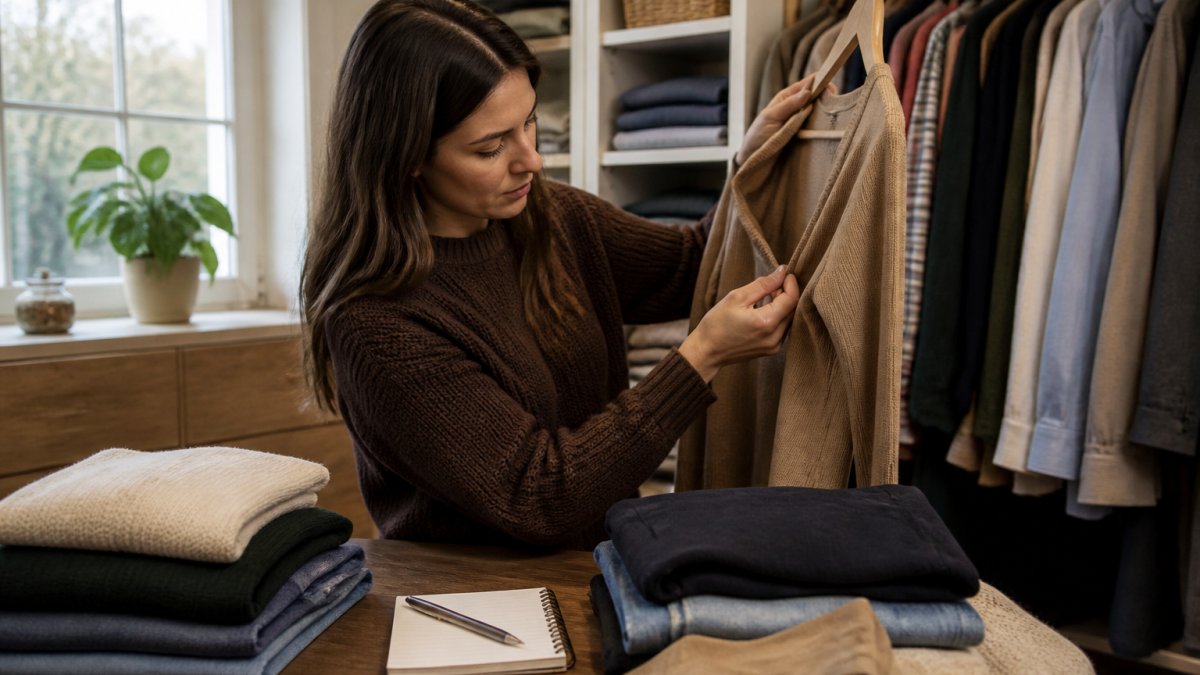
Choose Quality Over Quantity
One well-made shirt you'll wear for years beats five cheap shirts that fall apart. Quality clothing costs more upfront but costs less over time.
How to spot quality:
- Check seams: they should be straight and secure
- Feel the fabric: it should feel substantial, not thin or flimsy
- Look at details: zippers, buttons, hems should be well-finished
- Research the brand: do they use durable materials?
Elite custom T-shirts creates faith-inspired apparel with premium materials designed to last. When you invest in quality pieces that reflect your values, you're making a choice that honors both your budget and your beliefs.
Research Brands and Verify Claims
Not every brand that claims to be sustainable actually is. Some use "greenwashing", marketing language that sounds good but masks poor practices.
Questions to ask:
- Where are clothes made? Are working conditions documented?
- What materials are used? Are they sustainable or synthetic?
- Does the brand publish information about labor practices?
- Can you find independent reviews or certifications?
Look for certifications from organizations that verify ethical practices. Check brand websites for transparency about supply chains. Read customer reviews to see if quality matches the price.
Embrace Secondhand and Repair
Buying used clothing extends the life of garments and keeps them out of landfills. Repairing clothes when they wear out is both economical and environmentally responsible.
Where to find secondhand options:
- Local thrift stores
- Online resale platforms
- Clothing swaps with friends
- Estate sales and consignment shops
Learning to repair simple issues, replacing buttons, fixing seams, mending small tears, can add years to a garment's life. Many communities offer repair workshops or classes.
Ethical Christian Clothing and Loving Your Neighbor
Sustainable fashion isn't just about the environment. It's about people. When you choose ethical brands, you're choosing to love your neighbor in a concrete way.
This doesn't mean your clothing choices are the only way you show love. But they matter. Every purchase is a small act of justice or injustice. Over time, these choices shape the market and signal what consumers value.
Wearing faith-inspired apparel that's made ethically sends a message with your entire life. You're saying that your faith extends beyond Sunday worship into your daily choices.
Making Sustainable Choices on Any Budget
Sustainable fashion has a reputation problem: it sounds expensive. Sometimes it is. A new $120 organic cotton button-down is not in everyone's budget, and pretending otherwise is not honest stewardship. But the real question is not "new sustainable versus new fast fashion." It is "what is the lowest total cost of getting dressed well over the next five years?" Framed that way, the math often favors the slower path, and there are concrete ways to lower the entry cost.
Start With the Cheapest Sustainable Choice: Wear What You Own
The lowest-cost garment is the one already in your closet. Before any purchase, extend the life of what you have:
- Wash less, air dry more. Heat and agitation are the main causes of fabric breakdown. Cold water and line drying can meaningfully extend a garment's life.
- Rotate, don't repeat. Letting clothes rest between wears reduces wear on any single piece.
- Store properly. Fold knits instead of hanging them; use padded hangers for structured pieces.
None of this costs money. All of it reduces how often you need to buy.
The Real Math on Secondhand
Secondhand is the most reliable budget lever, and the savings are usually larger than people expect:
- Thrift and consignment, commonly 50-80% below original retail for everyday items.
- Online resale platforms, prices vary widely; popular sizes and brands sell close to retail, while less common sizes and older styles sell well below.
- Clothing swaps, effectively free; the only cost is time and the social friction of organizing one.
- Estate sales, often the deepest discounts on high-quality classic pieces, especially in the final hours of a sale.
A common pattern is that a reader can rebuild a work-appropriate wardrobe entirely secondhand for a fraction of what a single new fast-fashion haul would cost, and end up with better-constructed garments.
Repair Is Almost Always Cheaper Than Replace
A few representative repair costs, based on typical U.S. tailor and cobbler pricing:
- Replace a button, often free to a few dollars if you do it yourself; a tailor may charge a small flat fee.
- Hem a pair of pants, commonly $10-$25 depending on the fabric and whether the original hem is preserved.
- Patch a small tear, commonly $10-$20.
- Replace a zipper, commonly $20-$40, still far less than a new jacket.
- Resole leather shoes, commonly $40-$80, versus $100+ for a comparable new pair.
A basic sewing kit, a needle, and a spool of matching thread cost very little and cover most small repairs. Many public libraries and community centers offer free or low-cost repair workshops.
Where Sustainable New Clothing Fits
When you do buy new, the goal is not to buy the most expensive thing. It is to buy the piece you will actually wear for years. Practical rules:
- Buy for cost-per-wear, not sticker price. A $60 shirt worn 100 times costs $0.60 per wear. A $15 shirt worn five times costs $3.00 per wear.
- Prioritize basics. Plain tees, well-fitting jeans, a neutral jacket, and one or two pairs of shoes cover most of a week.
- Wait 30 days on non-essentials. If you still want it after a month, it is more likely to be worn.
- Buy off-season. End-of-season markdowns on quality basics are common.
Budget-Friendly Faith-Inspired Pieces
Faith-inspired apparel does not have to be a splurge. A well-made tote or tee in the $25-$40 range, worn regularly for years, lands at a very low cost-per-wear. The point is not the price tag, it is whether the piece gets used and reflects the values you want to carry into your day.

When Money Is Genuinely Tight
It is worth naming the obvious: for many households, clothing is a real line item, and any new purchase is a trade-off against groceries, rent, or medical costs. In that situation, the most faithful choice is often the most frugal one, secondhand, hand-me-downs, swaps, and repairs. There is no shame in that. Scripture consistently commends prudence over display.
A Simple Monthly Plan
A workable rhythm for most budgets:
- Month 1, Audit the closet. Identify what you actually wear and what is missing.
- Month 2, Repair or alter two items you already own.
- Month 3, Fill one real gap, secondhand first.
- Ongoing, Apply the 30-day rule to any new purchase, and track cost-per-wear on the pieces you wear most.
The goal is not a perfect wardrobe. It is a wardrobe that reflects contentment, care for the people who made it, and wise use of what God has entrusted to you.
Frequently Asked Questions
How does sustainable fashion connect with Christian stewardship?
Christian stewardship calls us to care for creation and use resources wisely. Sustainable fashion honors this by reducing waste, protecting the environment, and supporting ethical labor practices. When you choose durable, ethically made clothing over fast fashion, you're practicing responsible resource management and respecting both creation and the workers who make your clothes. This reflects biblical principles of wise spending and love of neighbor.
What are practical ways to build a more sustainable wardrobe?
Start by auditing what you already own and identifying gaps. Buy fewer, higher-quality pieces that last longer and work together. Research brands to verify their sustainability and labor practices before purchasing. Shop secondhand for classic items, and repair garments instead of discarding them. Invest in versatile, timeless designs rather than trendy pieces. Consider faith-inspired apparel from brands committed to ethical production, like Elite Custom's collection made with premium materials designed for longevity and meaningful wear.
Why is fast fashion harmful from a Christian perspective?
Fast fashion promotes overconsumption and waste, contradicting biblical principles of stewardship and wise spending. It often involves poor working conditions and low wages for garment workers, violating the call to love and justice for our neighbors. The environmental damage from textile production and waste also conflicts with our responsibility to care for creation. By choosing slower, more intentional consumption, Christians can align their purchasing with their values of human dignity, resource conservation, and care for the world.
How can I verify that a clothing brand is actually ethical and sustainable?
Look for third-party certifications like Fair Trade, GOTS (Global Organic Textile Standard), or B Corp status. Check the brand's transparency reports about their supply chain and labor practices. Research their material choices and production methods. Read customer reviews and testimonials from real buyers. Many ethical brands, including faith-focused companies like Elite Custom, openly share their commitment to quality materials and responsible production. Don't hesitate to contact brands directly with questions about their practices before making a purchase.
Choosing sustainable fashion as a Christian isn't about judgment or perfection. It's about aligning your daily choices with your deepest values. When you buy thoughtfully, support ethical brands, and care for your clothes, you're practicing stewardship in a real and meaningful way. Start today with one intentional purchase, a quality piece that will last, made by people treated fairly, from a brand you trust. Your wardrobe can tell the story of your faith.