

Table of Contents
- Why Ethically Sourced Christian Apparel Matters
- Understanding Ethical Clothing Certifications
- Verifying Fair Labor Practices in Clothing
- Materials That Define Sustainable Christian Apparel
- Traceability: From Fiber to Finished Garment
- Evaluating Ethical Christian Clothing Brands
- Your Ethical Apparel Verification Checklist
- Frequently Asked Questions
Last Updated: October 9, 2026
Why Ethically Sourced Christian Apparel Matters
When you wear faith-inspired clothing, you make two statements: you share your beliefs, and you vote with your wallet for how that garment was made.
At Elite custom T-shirts, we believe those two things should align. A shirt with a powerful message about grace or faith loses its impact if it was produced through exploitative labor or wasteful practices.
Ethically sourced Christian apparel means the garment was made fairly: workers paid living wages, materials from responsible sources, and a production process that respected people and the planet.
Many faith-conscious consumers feel this tension: you want apparel that expresses your beliefs and confidence that your purchase aligns with them.
This guide covers certifications and their limits, how to verify fair labor practices, and the materials that matter, so you'll have a practical checklist to evaluate any brand.
Understanding Ethical Clothing Certifications
Certifications matter, but they're not a complete picture. A certified garment has met specific standards, yet certification has blind spots.
Fair trade certification verifies fair wages and safe conditions through supply chain audits and required transparency. The most recognized are Fair Trade USA and World Fair Trade Organization (WFTO), which conduct independent audits and require ongoing compliance.
Organic certifications confirm materials were grown without synthetic pesticides or fertilizers. GOTS (Global Organic Textile Standard) is the gold standard, covering the entire supply chain from fiber to finished garment and checking labor practices alongside environmental standards.
B Corp certification measures a company's overall social and environmental impact through independent third-party audit. It's broader than apparel-specific standards but signals serious commitment to ethical business.
Key Certifications to Recognize
Look for these marks when evaluating ethical Christian apparel:
- GOTS (Global Organic Textile Standard), covers organic fiber AND fair labor practices
- Fair Trade USA, ensures fair wages and safe working conditions
- WFTO (World Fair Trade Organization), member organizations meet strict ethical standards
- B Corp, company meets high standards for social and environmental performance
- Cradle to Cradle, measures material safety and recyclability throughout the garment's life
- Bluesign, certifies that textile manufacturing avoids harmful chemicals
Each certification requires ongoing audits, so brands carrying these marks have submitted to independent verification.
What Certifications Don't Tell You
A certification proves a standard was met at the time of audit. It doesn't reveal supply chain transparency beyond what the certification requires, the brand's choices about materials and distribution, or how workers are treated between audits.
Certification also doesn't guarantee the entire garment meets that standard. A shirt might have certified organic cotton but conventional synthetic dyes, or a brand might carry one certification for one product line but not another.
Certifications also vary in rigor: some require annual audits, others less frequently; some inspect multiple facilities, others rely on self-reporting. The certification is trustworthy, but the depth of verification differs.
Certification is necessary but not sufficient. Use it as a starting point, then dig deeper.
Verifying Fair Labor Practices in Clothing
Fair labor means living wages, safe hours, freedom to organize, and no child labor, forced labor, or discrimination.
Most apparel brands don't own their factories; they contract with manufacturers who often subcontract. A garment might pass through five facilities before it reaches you, making labor conditions hard to track.
Questions to Ask About Factory Conditions
When you're evaluating a brand, ask these specific questions:
Does the brand disclose where garments are made? A brand serious about fair labor names its factories or at least its countries. Vague answers like "multiple facilities" suggest they don't want scrutiny. Elite custom T-shirts sources products from Honduras and other verified facilities.
Does the brand conduct independent audits? Fair labor certifications require third-party audits. Ask how frequently: annual beats biennial, and unannounced beats scheduled.
Can you find worker testimonials? Some brands publish worker interviews or facility tours. It isn't definitive proof, but it shows willingness to let workers speak; brands that hide supply chains often hide poor conditions.
Does the brand publish a transparency report? Leading ethical brands release annual or biennial reports detailing supply chain, labor practices, and improvement goals. Transparency about challenges is more credible than claims of perfection.
What's the brand's response to labor issues? No supply chain is perfect. The question is how a brand responds when problems emerge: do they investigate, remediate, and change? A brand's reaction to criticism reveals more than its marketing claims.
Materials That Define Sustainable Christian Apparel
Material choice is where ethics meet everyday wearability. The fiber you wear affects workers, the environment, and how long the garment lasts.
Organic Cotton and Natural Fibers
Organic cotton is grown without synthetic pesticides or fertilizers, protecting farmworkers from toxic exposure and soil health. It uses less water than conventional cotton in most cases.
But organic cotton isn't perfect: it still requires water, land, and labor, and in some regions uses more water than conventional cotton elsewhere.
Hemp requires minimal pesticides and little water, regenerates quickly, and is durable and breathable. It's increasingly common in faith-inspired apparel for its smaller environmental footprint than cotton.
Linen (from flax) uses less water and pesticides than cotton, is naturally antimicrobial and breathable, and gets softer with washing. It works well for warm-weather Christian apparel.
Wool from responsibly managed herds can be sustainable, but traceability is key: where it came from, how animals were treated, and whether land was managed sustainably.
Recycled and Alternative Materials
Recycled polyester diverts plastic from landfills and uses less energy than virgin polyester, but it's still synthetic and sheds microplastics when washed. For Christian apparel, it works best blended with natural fibers rather than as the primary material.
TENCEL (Lyocell) is made from wood pulp using a closed-loop process where the solvent is recycled, so minimal waste enters waterways. It's soft, breathable, drapes well, and biodegrades, offering a middle ground between pure synthetics and traditional natural fibers.
Deadstock and fabric scraps are leftover materials from other production; using them prevents waste, but only if the original fabric was ethically produced. Deadstock doesn't guarantee fair labor or sustainable fibers, so it's a bonus, not a substitute for ethical sourcing.
The best material depends on the garment's purpose: a t-shirt needs breathability and durability (organic cotton or hemp), a sweatshirt benefits from warmth and structure, and a tote bag, like our large organic tote bag made from 100% certified organic cotton, offers durability and environmental responsibility for everyday use.

Traceability: From Fiber to Finished Garment
True ethical sourcing means you can trace the garment backward. Where did the cotton grow? Which mill processed it? Which factory cut and sewed it? Which facility applied the dye?
This traceability is rare. Most brands can't trace beyond their immediate supplier, and the supply chain becomes opaque after one or two steps.
Brands serious about ethics invest in traceability systems using blockchain, serialization, or detailed record-keeping, audit suppliers regularly, and ask suppliers to audit their own suppliers.
Also ask about third-party verification. Did an independent auditor verify the supply chain? Or is the brand relying on self-reporting? Independent verification is more credible.
Traceability also means understanding dye and finishing, a step many brands overlook.
Evaluating Ethical Christian Clothing Brands
Now you're ready to assess specific brands. Use this framework.
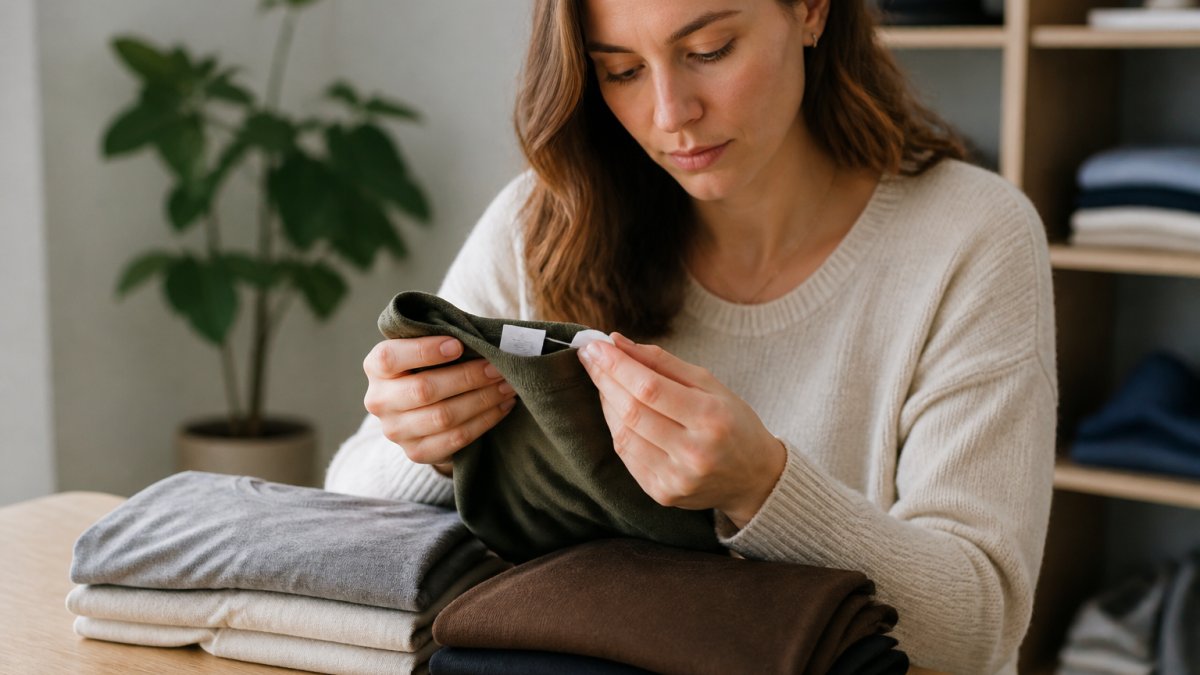
Brand Transparency and Supply Chain Disclosure
Start with what the brand tells you. Visit their website and look for a sustainability page or supply chain information: do they name factories, publish a transparency report, and explain material choices?
Brands with nothing to hide share details freely, explaining where garments are made, their certification status, and their challenges and improvements.
Elite custom T-shirts sources faith-inspired apparel thoughtfully. Our FAITH OVER FEAR Christian T-Shirt and Saved by Grace Christian T-Shirt are produced with attention to quality. We're transparent about our production partners and material choices.

Next, check for third-party verification: certifications from organizations like Fair Trade USA, GOTS, or B Corp mean independent auditors have verified their claims.
Finally, look for responsiveness. Email the brand about their supply chain: do they answer with specifics or vague responses? Willingness to engage about ethics signals commitment.
Durability and Cost-Per-Wear Value
Does the garment actually last?
A shirt made ethically but designed to fall apart after 10 washes isn't truly ethical: it generates waste, and the customer buys again, multiplying environmental impact and labor.
Look at construction details: double-stitched seams, a reinforced collar, and well-finished hems all affect longevity.
Check the fabric weight. Heavier fabric (measured in ounces per square yard) typically lasts longer. Our Saved by Grace Christian T-Shirt uses ring-spun cotton at 6.1 oz/yd² with double-needle stitching and twill-taped shoulders for durability.

Also consider care requirements: garments that survive regular washing and drying last longer and get worn more than those needing special treatment.
Calculate cost-per-wear: a $30 shirt worn 100 times costs $0.30 per wear, while a $15 shirt worn 20 times costs $0.75. The more expensive, durable option is cheaper over time and better for the planet because it generates less waste.
Your Ethical Apparel Verification Checklist
Use this checklist when evaluating any ethically sourced Christian apparel brand:
| Verification Area | What to Check | Why It Matters |
|---|---|---|
| Materials | Organic, recycled, or alternative fibers certified | Protects workers and environment during production |
| Labor Practices | Fair trade or similar certification with independent audits | Ensures fair wages and safe conditions |
| Supply Chain | Transparent factory disclosure and traceability | Allows verification of ethical claims |
| Certifications | GOTS, Fair Trade USA, B Corp, or equivalent | Third-party verification of standards |
| Durability | Double-stitched seams, reinforced stress points, quality fabric | Extends garment life and reduces waste |
| Brand Responsiveness | Answers questions about supply chain and practices | Shows genuine commitment to ethics |
| Care Instructions | Simple washing and drying requirements | Garment gets worn and lasts longer |
| Cost-Per-Wear | Price divided by estimated wears before replacement | Reveals true value and environmental impact |
Before you buy, work through this checklist:
- Does the brand disclose where garments are made?
- Can you find independent certifications (Fair Trade, GOTS, B Corp)?
- Does the brand publish a sustainability or transparency report?
- Are materials clearly labeled (organic cotton, hemp, TENCEL, recycled)?
- Are seams and construction details visible and well-finished?
- Can you find customer reviews about durability and fit?
- Does the brand respond to questions about ethics and sourcing?
- Does the price reflect the quality and ethical production?
- [ ]
- [ ]
Choosing ethically sourced Christian apparel means aligning your purchases with your values through asking questions, checking certifications, and thinking beyond marketing claims. That effort matters.
When you wear faith-inspired apparel from a brand that sources responsibly, you're not just sharing your beliefs. You're supporting fair labor, sustainable materials, and responsible manufacturing. Your purchase becomes a statement of faith in action. Elite custom T-shirts is committed to offering purpose-driven apparel that reflects both your values and your faith. Use this guide to verify that any brand you choose does the same.
Frequently Asked Questions
What certifications should I look for when buying ethically sourced Christian apparel?
Look for Fair Trade Certified, GOTS (Global Organic Textile Standard), and B Corp certifications. Fair Trade Certified ensures workers earn living wages. GOTS verifies organic fiber content and responsible manufacturing. B Corp confirms the brand meets strict environmental and social standards. However, certifications have limits, they audit at specific moments, not continuously. Combine certification checks with direct brand transparency about factory locations and worker conditions.
How can I verify that fair labor practices are actually being followed in clothing production?
Ask brands directly: Where are garments made? Do they publish factory lists? Do they conduct third-party audits? Legitimate brands share specific factory locations and audit reports. Visit brand websites for supply chain transparency statements. Be cautious of vague claims like 'ethically made' without supporting documentation.
What materials are best for sustainable Christian apparel?
Organic cotton is a sustainable choice, it avoids synthetic pesticides and uses less water than conventional cotton. Check product tags for material composition. Quality matters: well-made garments from durable materials last longer, reducing overall environmental impact.
Why does ethically sourced Christian apparel cost more than regular clothing?
Ethical production increases costs through fair wages, safer working conditions, certified materials, and transparency audits. Organic cotton costs 20-30% more than conventional cotton. Fair wages for garment workers add significant expense. Third-party certifications require ongoing compliance and testing. Smaller production runs (common for faith-based brands) eliminate bulk discounts. Quality construction, double-stitched seams, premium fabrics, lasts longer, justifying higher upfront cost. Calculate cost-per-wear: a $28 shirt worn 100 times costs $0.28 per wear; a $12 shirt worn 20 times costs $0.60 per wear.