

Table of Contents
- Why Proper Laundry Care Matters for Graphic Tees
- Know Your Print: Screen Print, Heat Transfer, and DTG
- How to Wash Graphic Tees Properly: Step-by-Step
- Best Laundry Detergent for Screen Printed Shirts
- How to Dry Graphic Tees Without Cracking the Print
- How to Iron Graphic Tees Safely
- Removing Stains Without Wrecking the Graphic
- Hard Water, Storage, and Repairing Damaged Graphics
Last Updated: August 23, 2026
Why Proper Laundry Care Matters for Graphic Tees
Graphic tees are vulnerable in ways plain cotton shirts aren't. The print is applied on top of the fabric, not woven into it, making it susceptible to heat, harsh chemicals, and mechanical friction. The difference between a graphic tee that looks sharp for years and one that cracks and fades after a month comes down to laundry habits.
Learning how to wash graphic tees properly takes about two minutes to understand and adds almost no extra effort to your routine. Below, we'll walk through exactly what to do, from identifying your print type to drying, ironing, storage, and repairing damage.
One more thing worth saying upfront: the care label inside your shirt is your first line of defense. According to FTC care labeling rules for textile products, manufacturers are legally required to provide accurate care instructions. Always check it before you wash anything new.
Know Your Print: Screen Print, Heat Transfer, and DTG
Not all graphic prints are made the same way, and that matters for how you wash them.
Screen Print
Screen printing presses ink through a mesh stencil onto fabric, producing a slightly raised, opaque print with vivid color. Screen printed designs are generally durable, but the ink layer can crack over time if exposed to high heat or harsh detergents repeatedly. This is the most common method for graphic tees sold at volume.
Heat Transfer
Heat transfer printing uses heat and pressure to bond a pre-printed film or vinyl design onto the fabric, resulting in a smooth, often glossy finish. Heat transfer prints are more sensitive to high dryer temperatures than screen prints; the adhesive bond can weaken, causing peeling at the edges.
Direct-to-Garment (DTG)
Direct-to-garment (DTG) printing sprays water-based ink directly into the fibers, like an inkjet printer for fabric. DTG prints have a softer feel because the ink soaks into the fabric rather than sitting on top. They're typically the most wash-sensitive of the three, especially in the first few washes, and they respond best to cold water and air drying.
| Print Type | Feel | Main Risk | Best Wash Method |
|---|---|---|---|
| Screen Print | Slightly raised, opaque | Cracking from heat | Cold water, gentle cycle |
| Heat Transfer | Smooth, glossy | Peeling at edges | Cold water, no high heat |
| Direct-to-Garment | Soft, fabric-like | Fading, color bleeding | Cold water, air dry |
How to Wash Graphic Tees Properly: Step-by-Step
The core process is straightforward: cold water, gentle cycle, inside out, and no harsh chemicals. Follow these five steps every time and your prints will last significantly longer.
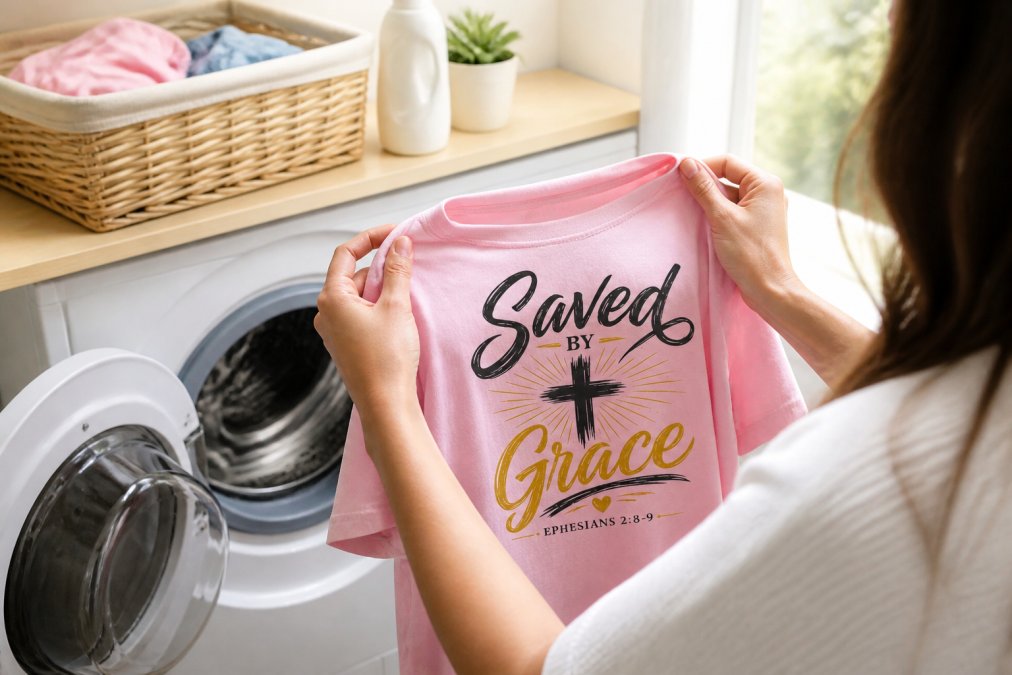
Step 1: Sort by Color and Fabric Type
Sort laundry before anything else. Wash dark graphic tees with other darks, and light-colored tees with lights. Also separate heavy fabrics like denim from lightweight tees; the mechanical friction of heavier fabrics accelerates print wear.
Step 2: Turn the Tee Inside Out
Turn every graphic tee inside out before it goes in the machine. This is the single most effective thing you can do to protect the print. It keeps the graphic away from direct contact with other garments and the drum surface, dramatically reducing friction, one of the primary causes of print cracking and fading.
Step 3: Use Cold Water and the Gentle Cycle
Cold water is non-negotiable for graphic tees. Hot water breaks down the bond between the ink and the fabric, whether that's the plastisol in a screen print, the adhesive in a heat transfer, or the water-based ink in a DTG design. Cold water also prevents shrinkage in the cotton fabric itself.
Select the gentle or delicate cycle on your machine. The gentle cycle uses slower agitation speeds, which means less mechanical stress on the print.
Step 4: Protect the Print with a Mesh Laundry Bag
A mesh laundry bag adds an extra layer of protection, particularly useful for shirts with detailed or multi-color prints. Place the tee inside the bag, inside out, before loading the machine. This step is especially worthwhile for DTG prints and heat transfer designs.
Step 5: Skip the Bleach and Fabric Softener
Bleach will destroy a graphic print. Even "color-safe" bleach contains optical brighteners and oxidizing agents that degrade ink over time. Keep it away from graphic tees entirely.
Fabric softener is a less obvious culprit, but it leaves a coating on the fabric that can cause detergent residue to build up over time and dull the print's colors. Skip it for graphic tees and use a gentle, dye-free detergent instead.
Best Laundry Detergent for Screen Printed Shirts
The best laundry detergent for screen printed shirts is a mild, liquid detergent free of optical brighteners, bleach, and heavy fragrance additives. Powder detergents can leave residue that builds up on the print surface over multiple washes, dulling the colors.
Look for detergents labeled "free and clear," "gentle," or "for delicates." Avoid any product that advertises whitening or brightening; those optical brighteners can alter the color balance of your print.
According to textile care guidance from the American Cleaning Institute, choosing the right detergent type for the fabric and print method is one of the most impactful decisions in laundry care for specialty garments.
How to Dry Graphic Tees Without Cracking the Print
Air drying is the best method for graphic tees. Heat is the enemy of every print technology. Tumble drying on high heat is the fastest way to crack a screen print, peel a heat transfer, or fade a DTG design.
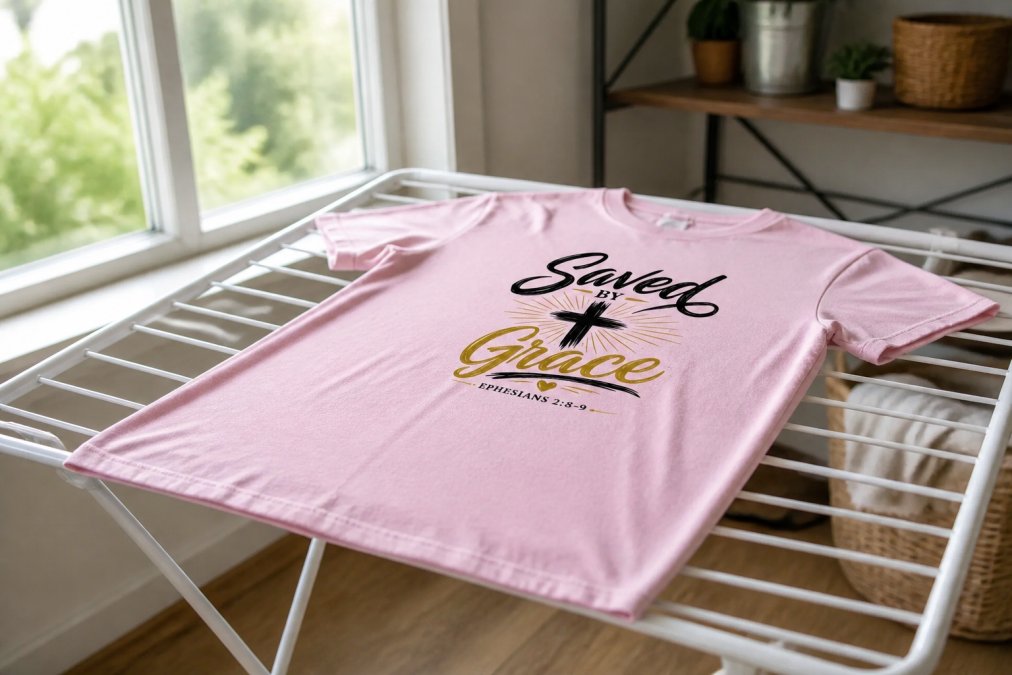
If you air dry, lay the shirt flat on a clean surface or hang it on a drying rack away from direct sunlight. Direct sunlight causes fading over time, particularly for vibrant or dark-colored prints.
If you must use a dryer, select the lowest heat setting available and remove the shirt while it's still slightly damp. Tumble dry on low heat is acceptable as a practical compromise; it's far better than high heat. Never use the "auto dry" setting.
| Drying Method | Print Safety | Fabric Safety | Recommended? |
|---|---|---|---|
| Air dry flat | Excellent | Excellent | Yes, preferred |
| Hang dry (shade) | Excellent | Good | Yes |
| Tumble dry, low heat | Fair | Good | Acceptable |
| Tumble dry, high heat | Poor | Poor | No |
| Direct sunlight | Poor | Fair | No |
How to Iron Graphic Tees Safely
Ironing graphic tees safely requires two things: low heat and never ironing directly on the print. Direct heat from an iron will melt heat transfer vinyl, crack screen print plastisol, and permanently damage DTG ink.
Turn the shirt inside out before ironing. Iron on the reverse side of the print using a low or medium-low heat setting. If you need to iron the front of the shirt, place a thin pressing cloth or clean cotton pillowcase between the iron and the print. Never use steam directly on a graphic print.
Removing Stains Without Wrecking the Graphic
Stain removal is where graphic tees are most often accidentally damaged. Act fast; the sooner you treat a stain, the easier it is to remove without aggressive scrubbing. Blot (don't rub) the stain with a clean cloth to absorb as much of the liquid as possible before it sets.
For stains near or on the graphic, apply a small amount of mild liquid detergent directly to the stained area and gently work it in with your fingertip. Let it sit for five to ten minutes, then rinse with cold water. Avoid stain remover sprays that contain bleach, optical brighteners, or strong solvents; these will damage the print faster than the stain itself.
Hard Water, Storage, and Repairing Damaged Graphics
These three topics rarely appear in basic laundry guides, which is exactly why they're worth covering here.
Hard Water and Your Graphic Tee
Hard water contains elevated levels of dissolved minerals, primarily calcium and magnesium. These minerals can leave a mineral film on the fabric and print surface over time, resulting in dull-looking colors.
If you're in an area with hard water, use a slightly higher dose of liquid detergent, add a water softener additive to the wash, and rinse with an extra cold rinse cycle. According to water quality information from the U.S. Geological Survey, a significant portion of households have moderately hard to very hard water, making this a relevant issue for many graphic tee owners.
Storing Graphic Tees to Preserve the Print
Folding is better than hanging for long-term storage. Hanging a graphic tee on a hanger for extended periods stretches the neckline and can stress the print.
When folding, fold with the print facing inward. Stack tees with the heaviest items at the bottom. Avoid storing in direct sunlight or in areas with high humidity, both of which accelerate fabric degradation and print fading.
Repairing a Cracked or Peeling Print
Cracked or peeling prints are not always a death sentence for a favorite shirt. The repair approach depends on the print type.
For heat transfer prints that are peeling at the edges, a household iron set to low heat can re-bond the lifted section. Place a thin pressing cloth over the peeling area and apply gentle pressure with the iron for ten to fifteen seconds.
For screen prints with minor cracking, fabric paint in a matching color can fill in the cracks. Apply with a fine brush, let dry completely, and heat-set with an iron to cure the paint.
For DTG prints with fading, there's no reliable home repair method. Prevention is the only real strategy.
The faith-inspired tees from Elite Custom T-shirts, like the Saved by Grace Christian T-Shirt and the God Over Everything Unisex Tee, are crafted from premium materials designed to hold up well with proper care. Following the steps in this guide will keep those prints looking sharp wash after wash, so your message stays as clear as the day you first wore it.


For a deeper look at textile care standards that apply to apparel labeling and fabric treatment, the ASTM International textile standards library provides technical guidance used across the apparel industry.
Your graphic tees carry a message worth preserving. Treating them with the right laundry care isn't a chore, it's how you protect something meaningful. Elite Custom T-shirts designs each piece with premium materials and purposeful prints, but even the best quality needs the right care to last. Check out the full collection, including the Faith Over Fear Christian T-Shirt and the With God Anything Is Possible Tee, and shop now to wear your faith with confidence, knowing exactly how to keep it looking its best.

Frequently Asked Questions
Should graphic tees be washed inside out?
Yes, always turn a graphic tee inside out before washing. Flipping the shirt protects the print from direct friction against the drum, other clothing, and detergent residue. This single step does more to prevent fading and print cracking than almost any other laundry habit. It applies to screen print, heat transfer, and direct-to-garment designs alike. Pair it with a cold water, gentle cycle wash for the best results.
Does hot water damage graphic tees?
Hot water is one of the fastest ways to ruin a graphic tee. High temperatures break down the inks used in screen printing and DTG printing, causing fading and cracking after just a few washes. Heat also accelerates shrinkage in cotton fabrics. Wash graphic tees in cold water, ideally 60°F or below, to keep both the print and the fabric in good shape wash after wash.
What is the best detergent for screen-printed shirts?
Choose a mild detergent free of bleach, optical brighteners, and harsh enzymes. Detergents marketed as gentle or for delicate fabrics work well. Avoid anything labeled 'whitening' or 'brightening,' as optical brighteners chemically alter ink colors over time. Liquid detergents tend to dissolve more fully in cold water than powder, reducing detergent residue buildup on the print. Use the recommended amount, more detergent does not mean cleaner clothes.
How do you remove wrinkles from graphic tees without damaging the print?
The safest method is to steam the shirt with the print facing away from the steam source, or to iron it inside out on a low heat setting with a pressing cloth between the iron and the fabric. Never press an iron directly onto a screen print or heat transfer graphic, the heat will melt or distort the design. Hanging the tee immediately after washing also reduces wrinkles before they set, cutting down on the need to iron at all.
This article was written using GrandRanker