

Table of Contents
- Best Laundry Settings for Cotton Graphic Tees: A Quick-Reference Chart
- The Best Water Temperature to Wash Graphic Tees
- The Best Washer Cycle for Cotton Shirts
- Detergent for Graphic Tees: What to Use and What to Skip
- How to Dry Graphic Tees Without Shrinking
- Print Types and Fabric: Why Care Instructions Vary
- Stain Treatment and Pretreatment for Graphic Tees
- Common Mistakes That Damage Cotton Graphic Tees
- Frequently Asked Questions
Last Updated: October 14, 2026
Best Laundry Settings for Cotton Graphic Tees: A Quick-Reference Chart
The best laundry settings for cotton graphic tees come down to four choices: cold water, a gentle or delicate cycle, a mild liquid detergent, and low heat or air drying.
Here is the short version; the rest of this guide explains why each setting matters.
| Setting | What to Choose | What to Avoid |
|---|---|---|
| Water temperature | Cold or lukewarm | Hot water |
| Washer cycle | Gentle or delicate | Normal or heavy duty |
| Spin speed | Low | High spin |
| Detergent | Mild, color-safe liquid | Bleach, fabric softener |
| Drying | Low heat or air dry | High heat, direct sun |
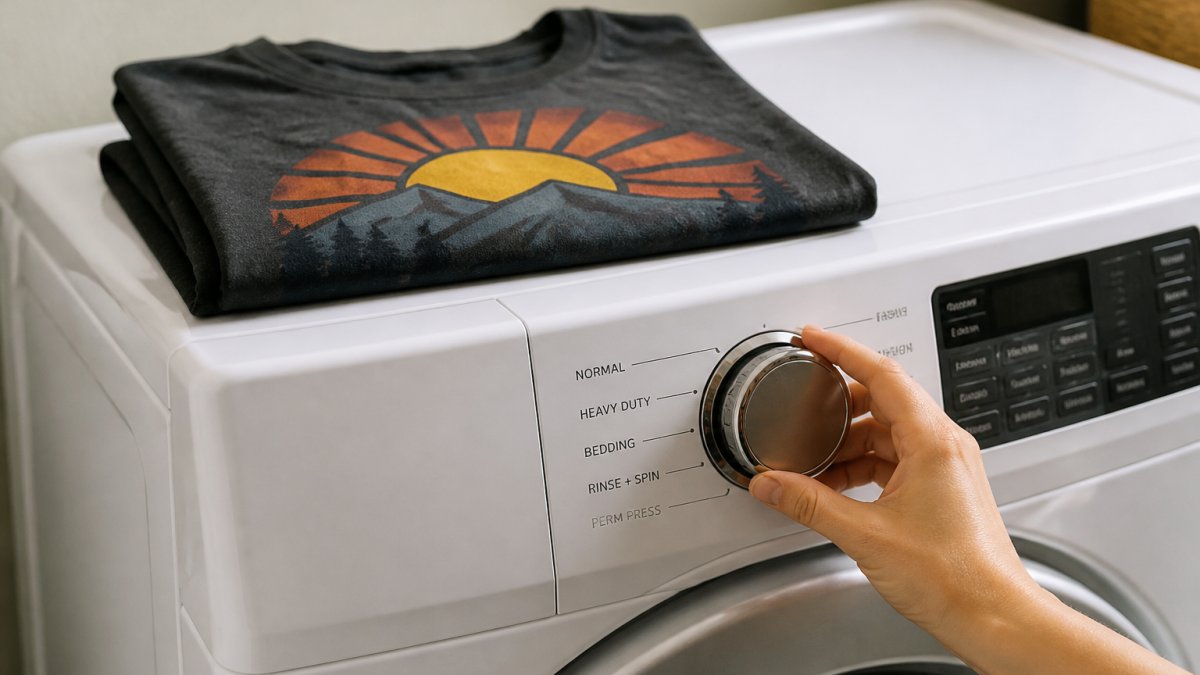
The Best Water Temperature to Wash Graphic Tees
Cold water is the best water temperature to wash graphic tees, and lukewarm is the safe ceiling. Heat is the biggest threat to cotton fibers and printed designs, so the cooler you wash, the longer both last.
A practical target: keep wash water at or below about 85°F. Most cold taps run 60°F to 80°F, and machine "cold" settings land in that band.
Cold Water vs. Warm or Hot Water
Cold water keeps colors from bleeding and limits shrinkage. Warm water cleans slightly better on body oils but speeds up fading. Skip hot water entirely.
Many people reach for hot water out of habit, assuming it sanitizes the load, but that trade-off is not worth it on a printed tee.
| Water Setting | Typical Temp | Effect on Cotton | Effect on Print |
|---|---|---|---|
| Cold | 60-80°F | Minimal shrinkage, color holds | Safest for all print types |
| Warm | 90-110°F | Some shrinkage over time | Fading and adhesive softening risk |
| Hot | 120°F+ | Accelerated shrinkage, fiber wear | Cracking, lifting, color loss |
How Water Temperature Affects Cotton Fibers and Printed Designs
Cotton fibers relax and contract when temperatures swing. Repeated hot washes accelerate shrinkage and wear down the fabric surface, and since prints sit on top of those fibers, the print moves with them.
The bond between a print and a cotton shirt is either a cured ink layer on the surface (screen print, DTG) or a heat-applied adhesive film (HTV, or heat transfer vinyl). Both are heat-sensitive, but in different ways:
- Plastisol screen prints are cured at roughly 320°F during production. Wash water never gets close to that, so the ink itself is stable. The risk is mechanical, not thermal: hot water swells and shrinks the cotton underneath, and the ink layer does not flex with it, so it cracks along the print edges.
- DTG prints bond ink into the cotton fibers with a pretreatment. Hot water can break down that pretreatment over time, which shows up as a dull, washed-out print rather than a cracked one.
- HTV and heat-transfer prints rely on an adhesive that softens with heat. Warm or hot water can loosen the edges of the film, and once an edge lifts, the whole graphic peels from that corner.
Cold water keeps fiber movement small and keeps every one of those bonds intact. The print stays bonded, the color stays put, and the shirt keeps its shape.
The Best Washer Cycle for Cotton Shirts
The best washer cycle for cotton shirts with a print is gentle or delicate, paired with a low spin speed. A normal cycle agitates hard enough to crack ink and dull color over time.
Gentle and Delicate Cycles: When to Use Each
Use delicate for thinner tees, older shirts, or large print areas, and gentle for everyday cotton tees that just need a lighter wash. Both use less agitation, which protects the print.
Turn each shirt inside out before it goes in, so the print faces itself instead of the drum, zippers, or buttons.
Spin Speed, Load Size, and Laundry Bags
A high spin speed wrings the fabric and stresses the print. Set spin to low and let the dryer or a hanger finish the job.
- Keep loads small to medium so shirts move freely
- Wash similar weights together to reduce friction
- Use a mesh laundry bag for delicate or heavily printed tees
Detergent for Graphic Tees: What to Use and What to Skip
Use a mild, color-safe liquid detergent, and less than you think you need. Powders leave residue on prints, and harsh additives break down the ink-to-fabric bond.
Mild and Color-Safe Liquid Detergents
A small amount of liquid detergent is enough for a normal load; too much leaves film that traps dirt and dulls the design. A delicate or hand-wash setting usually dispenses a gentler amount.
For dark tees, a color-safe formula helps hold the dye. For light tees, a free-and-clear liquid without dyes or perfumes is a safe default.
Why Bleach and Fabric Softener Damage Prints
Bleach attacks dye and ink alike, and even a small amount can leave permanent pale spots on a graphic.
Fabric softener coats fabric in a waxy layer that builds up on the print, makes the design look cloudy, and reduces water absorption in future washes. Skip both.
How to Dry Graphic Tees Without Shrinking
Air drying is the safest way to dry graphic tees without shrinking, and low heat in the dryer is next best. Heat does more damage to cotton and prints than any other step.
FAITH OVER FEAR Christian T-Shirt – Blue & Gold →
Low Heat, Tumble Dry, and Air Dry Options
If you use a dryer, choose the lowest temperature and a low tumble, then pull shirts out slightly damp and hang them to finish. This cuts dryer time and heat exposure.
Hang drying works for almost every tee; lay knits flat to protect the collar and shoulders.
Dryer Balls and Heat Exposure
Wool dryer balls separate fabrics so air moves through the load faster, shortening drying time and total heat exposure for every shirt.
- Skip dryer sheets, which leave the same waxy residue as fabric softener
- Never dry on high heat, even for a short cycle
- Keep shirts out of direct sun, which fades prints over time
Print Types and Fabric: Why Care Instructions Vary
Not every graphic tee is printed the same way, and the print type changes how careful you need to be. A screen print, a direct-to-garment print, a heat-transfer vinyl graphic, and a sublimated design each fail differently and need slightly different handling.
Screen Print
Screen printing pushes a thick layer of plastisol ink through a mesh screen and cures it with heat, producing a durable, opaque print that sits on top of the fabric. Screen prints handle a gentle cycle well and are the most forgiving graphic tee to wash. They fail by cracking along the ink edges where the cotton flexes underneath, so prioritize low agitation and low heat: turn the shirt inside out, use cold water, and skip the dryer when you can.
Direct-to-Garment (DTG)
DTG printing works like an inkjet printer for fabric: the shirt is pretreated, then water-based ink is sprayed into the cotton fibers and cured. DTG prints feel softer and sit closer to the fabric than screen prints but are more sensitive to wash chemistry. The pretreatment holds the ink in place, and hot water, bleach, and fabric softener all degrade it, causing fading and a washed-out look rather than cracking.
Heat-Transfer Vinyl (HTV)
HTV is a colored film cut into a design and bonded to the shirt with a heat press, held on by an adhesive layer that softens when hot. It is the print type most likely to peel: an edge lifts, then the whole graphic comes off. Warm or hot water, a hot dryer, and ironing directly over the print are the fastest ways to ruin an HTV shirt.
Sublimation
Sublimation uses heat to turn solid dye into gas that bonds into polyester fibers, so it does not work on 100% cotton, you will only see it on polyester or high-poly blends. The print becomes part of the fabric rather than sitting on top, making it very durable and crack-resistant.
How Fabric Composition Changes the Rules
Fabric matters too. Our FAITH OVER FEAR Christian T-Shirt is 100% cotton, while our God Over Everything tee blends combed ring-spun cotton with polyester in the heather colors. Blends shrink less but still fade under heat.


A few fabric rules worth knowing:
- 100% cotton shrinks the most and holds prints the most predictably. Expect some shrinkage on the first wash even with pre-shrunk fabric.
- Cotton/poly blends shrink less and dry faster, but the poly content can cause dye migration on light-colored prints if the shirt is exposed to high heat.
- Heavyweight cotton (6 oz and up) takes longer to dry and holds more water, so a low-heat dryer cycle may need extra time. Air drying is still the safest option.
When the Care Label Wins
If the care label says something different from this guide, follow the label, it is written for that specific garment, print, and finish. Specialty finishes like water-based discharge, puff, or foil prints may need handling that does not match the general rules above. When in doubt, treat the shirt like the most delicate item in the load.
Stain Treatment and Pretreatment for Graphic Tees
Treat stains from the inside out, and never rub. Blotting from the back pushes the stain off the fabric instead of driving it deeper into the print.
- Blot fresh stains with a clean cloth right away
- Apply a small amount of mild liquid detergent to the spot
- Let it sit for a few minutes, then rinse in cold water
For grease, a drop of dish soap on the spot works better than most stain sprays. For ink or grass, a color-safe pretreater is the safer bet.
Common Mistakes That Damage Cotton Graphic Tees
The mistakes that ruin graphic tees are almost always about heat, friction, or harsh chemicals. Fix those three and most shirts last for years.
- Washing in hot water "to get them cleaner"
- Using the normal or heavy-duty cycle on printed tees
- Pouring in too much detergent
One more habit: sort by color. Washing lights and darks separately keeps dark dyes from bleeding onto lighter cotton and keeps graphic tees looking new longer.
Frequently Asked Questions
What type of detergent should I use to wash graphic tees?
Use a mild, color-safe liquid detergent. Liquid formulas dissolve more easily in cold water than powder, so they rinse away cleanly without leaving residue on the printed design. Avoid detergents with bleach or brightening agents, which can fade colors and break down the ink or plastisol in screen prints. A small amount is enough; using too much detergent leaves a film that dulls the print over time.
Will 100% cotton shrink if I wash it?
Cotton can shrink when exposed to heat, especially in the dryer. Washing in cold water and drying on low heat or air drying minimizes shrinkage. Many cotton tees are pre-shrunk, which reduces but does not eliminate the risk. A 100% ring-spun cotton tee like the Saved by Grace Christian T-Shirt benefits from cold washing and low-heat drying to keep its relaxed fit wash after wash.
Should you wash graphic tees inside out?
Yes. Turning graphic tees inside out before washing protects the printed design from friction against other garments and the drum. This simple step reduces fading, cracking, and peeling. It also helps preserve the color of the fabric itself. Pair inside-out washing with a gentle cycle and cold water for the best results.
Can fabric softener damage a graphic tee print?
Fabric softener can leave a waxy coating on the printed design that dulls colors and weakens the bond between the ink and the fabric. Over time, this leads to cracking and peeling. Skip fabric softener entirely for graphic tees. If you want softer shirts, use dryer balls during a low-heat tumble or air dry and give the fabric a quick shake before hanging.
A printed tee only stays vibrant if the wash routine matches the fabric and the ink. At Elite custom T-shirts, we build our faith-inspired designs on premium cotton and durable prints, so the message on your shirt holds up the same way your faith does: wash after wash. Shop the collection and wear your faith with confidence.